Why Dating Apps Feel Broken for Both Men and Women
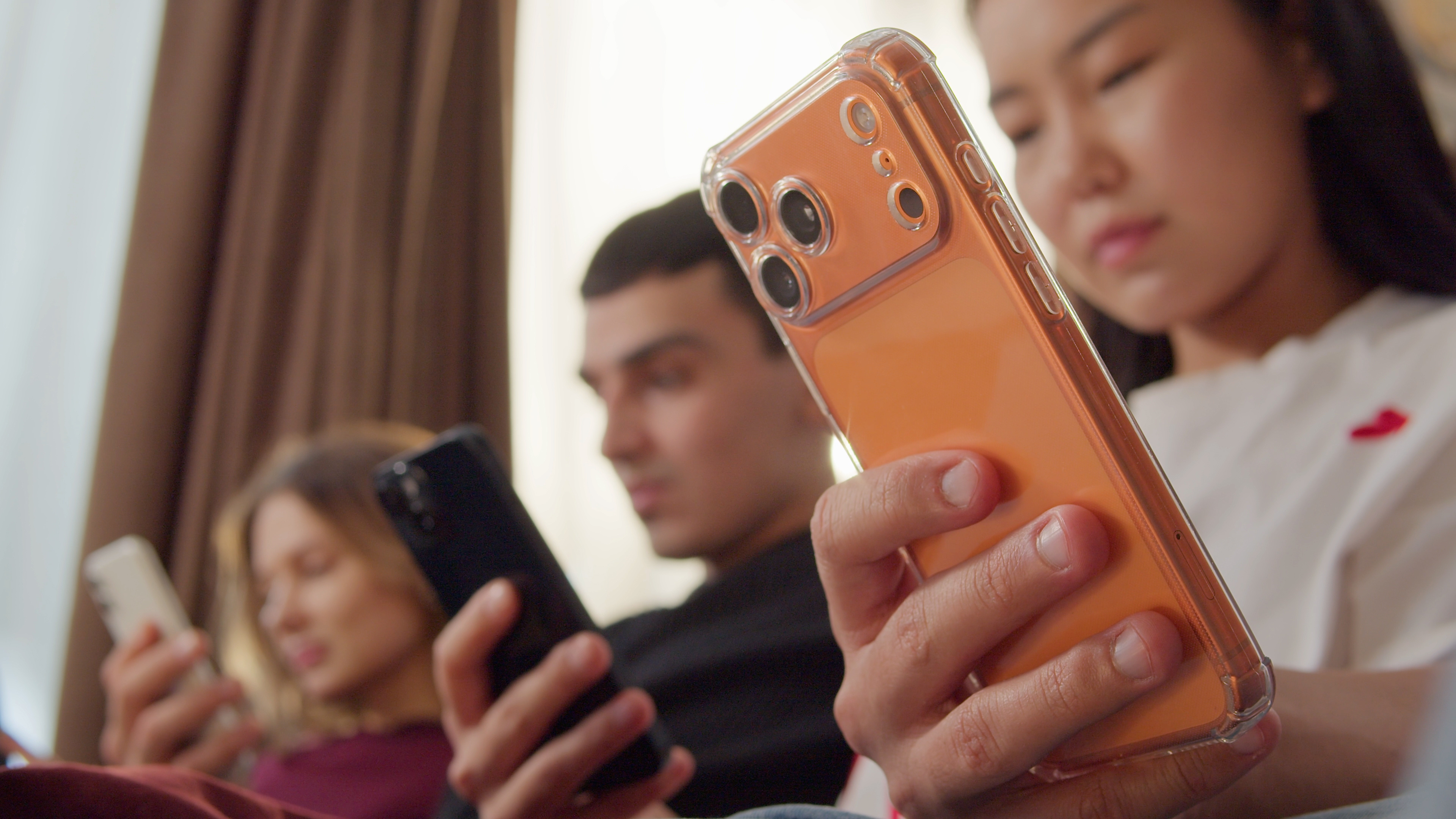
One of the more interesting things about working in the dating industry is hearing how differently men and women describe the exact same dating market. Women tell us they are overwhelmed, tired of sorting through matches, frustrated by low-effort conversations, and wondering why someone who seemed interested disappeared three days later. Men tell us they aren't getting enough matches in the first place, that their conversations go nowhere, and that dating apps simply don't seem to work for them.
At first, those experiences sound like they contradict each other. How can women have too many options while men feel like they have none? But when you look at how attention is distributed on dating apps, and what happens psychologically when people are given a seemingly endless supply of choices, the complaints start making a lot more sense.
And perhaps more importantly, they stop sounding like evidence that there are “no good men left” or “no good women left.” There are plenty of good people trying to find each other. The way we're asking them to find each other may be part of the problem.
We need to talk about the 80/20 rule
You've probably heard some version of this statistic online: 80% or even 90% of women on dating apps are competing for the same top 20% of men. It gets repeated so often that it has practically become accepted as fact.
The reality is more complicated. There is evidence that attention on dating platforms is unevenly distributed, but I haven't found credible research supporting the exact claim that 90% of women are pursuing precisely 20% of men. I think that's an important distinction, because we don't need to exaggerate the numbers to talk about the very real problem underneath them.
What we do know is that men and women can have dramatically different experiences using these platforms. We also know that giving people access to more potential partners doesn't necessarily make them better at identifying the right one. In some cases, research suggests it does the opposite.
More options sounded like the solution. They may be part of the problem.
.jpeg)
Dating apps were built around a pretty compelling premise: if meeting ten eligible people gives you ten opportunities to find love, meeting 1,000 should give you far better odds. Mathematically, that sounds reasonable. Human beings, unfortunately, do not date like spreadsheets.
Researchers Tila Pronk and Jaap Denissen studied what happens as people work through potential partners online. Across three studies, they found that people became increasingly likely to reject potential partners as they encountered more choices. From the first potential partner evaluated to the last, the chance of accepting someone declined by an average of 27%. The researchers actually gave the phenomenon a name: a “rejection mind-set.”
Think about what that means in the context of modern dating. The longer you look, the easier it may become to say no. Instead of becoming better at recognizing a good option, we can become better at finding reasons why someone isn't one.
Another study published in Computers in Human Behavior tested this more directly. Participants were given 11, 31 or 91 potential dating profiles. Those presented with greater partner availability experienced more choice overload, lower state self-esteem and greater fear of being single. More people to choose from did not simply make dating easier.
Pew Research Center has found that Americans recognize the problem themselves. Thirty-seven percent say dating sites and apps give people too many choices, compared with only 13% who think they provide too few.
So maybe the question isn't whether we have enough people to choose from anymore. Maybe it's whether having this many people to choose from is actually helping us choose.
Now imagine you're one of the people getting all that attention
This is where I think some of the behavior women complain about on dating apps becomes easier to understand. Not excuse, but understand.
If someone receives a tremendous amount of attention, there is very little friction involved in moving on. One conversation gets a little boring and another is waiting. A first date is good but doesn't produce fireworks, and there are five other matches sitting in the inbox. Someone asks for a little more effort or accountability, and starting over can feel easier than working through it.
That doesn't automatically make someone a bad person. Put almost anyone into an environment where there is an apparent unlimited supply of alternatives and it is going to affect how they perceive the option currently in front of them.
I think this is part of what people are describing when they talk about low effort, conversations abruptly dying, ghosting, breadcrumbing, or someone constantly seeming to have one foot out the door. The person receiving a disproportionate amount of attention doesn't have to invest very much to continue receiving more opportunities.
But there is a catch for that person too. Eventually, abundance can become its own dating problem. When another possibility is always waiting, it becomes incredibly easy to believe the next person might be slightly better. You aren't necessarily choosing among relationships anymore. You're comparing real human beings to hypothetical people you haven't even met. And hypothetical people have one enormous advantage: they haven't disappointed you yet.
The men who aren't getting matches are having a completely different experience
Now move to the other side of the app. There are men who would make wonderful partners who receive surprisingly little attention online. We see this often enough in our work that I think it deserves much more discussion.
.jpeg)
Some of these men are accomplished, kind, funny, relationship-ready and attractive in person. But perhaps their photos are terrible. Their profile doesn't communicate their personality. They aren't particularly good at writing opening messages. The qualities that make them appealing in real life simply aren't the qualities that jump off a screen in two seconds.
Dating apps force people to market themselves, and being good at marketing yourself is not remotely the same skill as being good at relationships.
After months of little traction, it makes perfect sense that someone becomes frustrated. He starts thinking the apps don't work. Eventually that frustration can turn into the belief that women aren't interested in good men or that there simply aren't quality women available.
Meanwhile, plenty of quality women are sitting on the other side of the same platform feeling overwhelmed by the volume of attention they're receiving.
Both sides conclude that the other side is the problem.
For many women, the problem isn't getting matches. It's finding the match inside the matches.
A woman can open an app and have dozens, sometimes hundreds, of people expressing interest. From the outside, that looks like an incredible dating advantage. In reality, she still has to figure out which of those people is compatible, relationship-ready, emotionally available, geographically realistic, aligned with what she wants and actually interested in meeting her.
.jpeg)
That is where the volume becomes its own problem. Every profile needs to be reviewed, conversations have to be started and maintained, intentions have to be figured out, red flags have to be noticed, and eventually somebody has to decide which conversations deserve an actual date. Multiply that process across a large pool of people and it becomes work.
This is something I wish we talked about more when we discuss dating-app success. A large number of matches is not the same thing as a large number of viable partners. In fact, the research on choice overload suggests there is a point at which adding more possibilities can make the decision harder rather than easier.
Eventually people burn out. They stop reviewing everyone. They become faster at rejecting. They leave messages unanswered. They take breaks from the apps or delete them entirely. Then the person on the other side thinks, “See? Nobody responds on these apps.” And around we go.
Dating apps may be creating scarcity and abundance at the same time
This is the part of the conversation I think gets missed. We keep talking about dating apps as though everyone is participating in the same marketplace, when their individual experiences can look nothing alike.
One person experiences abundance without clarity. Another experiences scarcity without understanding why. A smaller group receives a disproportionate amount of attention and may struggle with an entirely different problem: believing there is always another option.
All three can walk away unhappy.
That's why I don't think the current frustration with dating apps necessarily tells us something terrible about modern men or modern women. I think it tells us something about what happens when human attraction, which is complicated and incredibly contextual, gets squeezed into an environment built around rapid decisions and enormous choice.
And then we see something interesting in matchmaking
This is one of the reasons I find the contrast between dating apps and matchmaking so interesting. In our world, we often see a very different balance of singles, including a significant number of accomplished, relationship-minded women actively looking for partners.
That matters because matchmaking changes the question. Instead of asking, “Who can I get?” or “Who else is out there?” we are asking, “Who actually makes sense for this person?”
Those are very different questions.
A matchmaker can look at the man whose profile would have been passed over in three seconds and recognize the qualities that simply don't translate well on an app. She can also look at someone receiving endless attention and say, “Yes, you have a lot of options, but these three are the ones that actually align with the life you say you want.”
There is context. There is screening. There is feedback after dates. There is somebody paying attention to patterns that are extremely difficult to see when you're standing inside your own dating life. Most importantly, there is a finite number of introductions. And perhaps we've underestimated how valuable that is.
We don't think everyone needs to delete the apps
I want to be very clear about this because we also manage dating apps for clients at After Hello. Apps work. People meet partners on them every single day, and Pew found that 42% of U.S. adults believe online dating has made finding a long-term partner easier.
What we don't believe is that downloading an app and swiping harder is automatically a dating strategy.
For some of our clients, the better answer is matchmaking. They want someone else doing the sourcing, screening and thinking, and they would rather meet a small number of people selected intentionally than manage hundreds of possibilities themselves.
For others, the apps are absolutely the right tool. They just don't want the second job that comes with using them effectively. That's where our Dating App Management service comes in. We can help with positioning, profile strategy, searching, screening and managing the process so that the objective isn't to accumulate matches. It's to find the people worth meeting.
Both services solve different versions of the same problem: too much noise between two people who might actually be right for each other.
Maybe we don't need more choices. Maybe we need better ones.
For years, online dating sold us the idea that more access would solve dating. More singles. More profiles. More matches. More possibilities.
We certainly got the access. I'm just not convinced that access was ever the thing we were missing.
Because after working with singles and watching this play out from both sides, I don't think there is some mysterious shortage of good men or good women. I think there are a lot of good people who aren't finding each other, and an enormous amount of noise standing between them.
Maybe the next evolution of dating isn't about giving people another thousand profiles to consider. Maybe it's about getting much better at identifying the five they should have met in the first place.
And that is a very different way to date.
Sources & further reading
- Pronk & Denissen, “A Rejection Mind-Set: Choice Overload in Online Dating,” published in Social Psychological and Personality Science. Their three studies found an average 27% decline in acceptance likelihood from the first to last potential partner evaluated. Read the study at SAGE Journals
- Thomas, Binder & Matthes, “The Agony of Partner Choice,” published in Computers in Human Behavior. The researchers tested exposure to 11, 31 and 91 potential partners and found that high partner availability increased choice overload and fear of being single while decreasing state self-esteem. Read the study at ScienceDirect
- Pew Research Center, “Americans’ Views on Online Dating.” Pew found 37% of Americans believe dating platforms provide too many choices, versus 13% who believe they provide too few. Read the Pew Research Center report
Related Articles
.jpg)

Ready to Rewrite Your Love Story?
After Hello is more than a matchmaking service; we're your partners in crafting a love story that lasts. Whether refining your approach to online dating, enhancing your first-date dynamics, or guiding you through the dating etiquette maze, our expertise is at your service.
Book a Discovery Call
.svg)
.svg)
.svg)

